PLAN & MEASURE
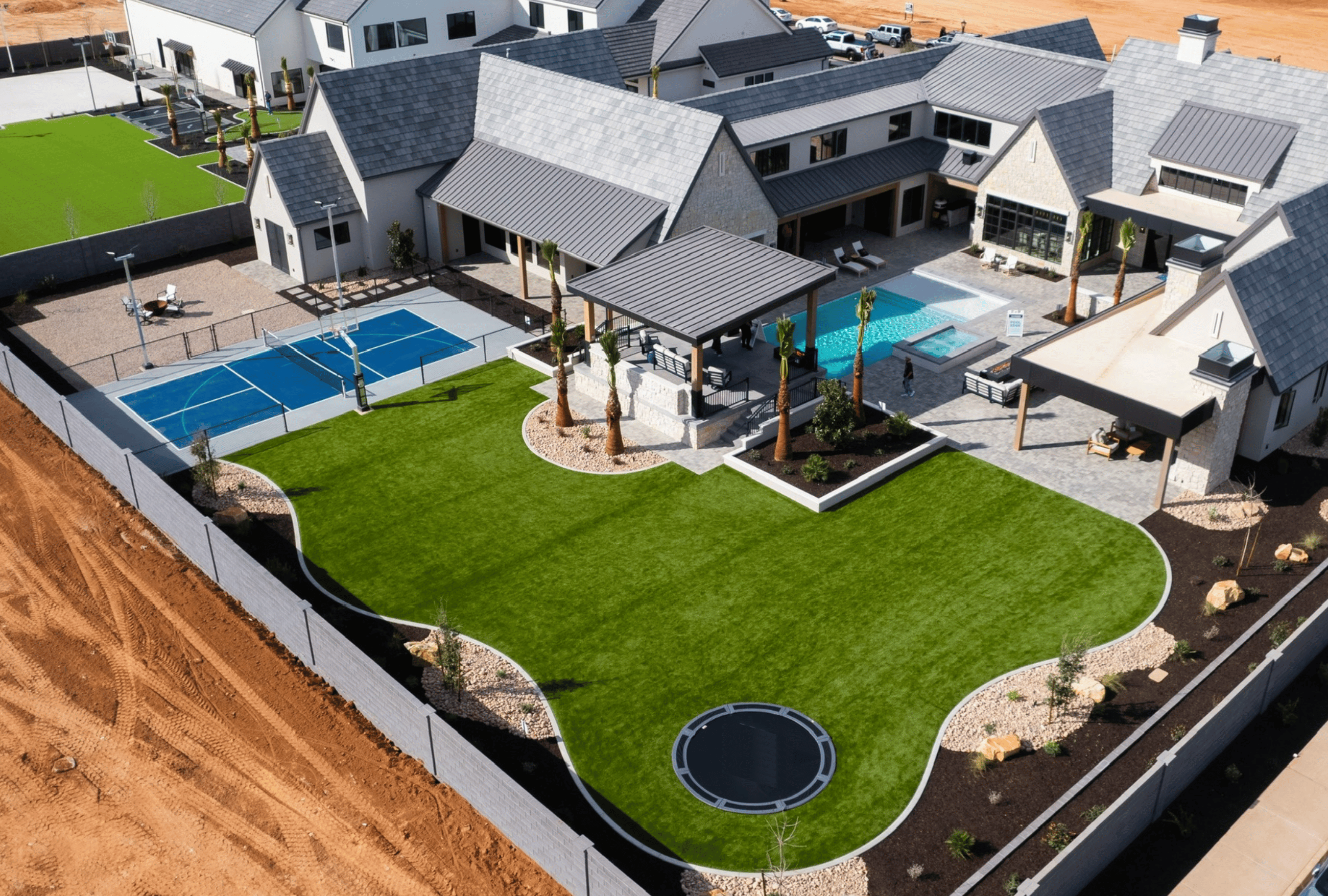
Measure the area you want to cover and determine the shape and layout. Turf rolls come in standard widths (typically 15 feet), so you'll need to plan your seam placements and calculate total square footage including a few extra feet for trimming and overlap. Our team can help you plan your layout and calculate your material order during a free consultation.
Clear the Area and Prepare the Base
Remove all existing grass, weeds, roots, and debris. For most projects, this means cutting out the sod and removing 2 to 3 inches of topsoil to make room for the base layer. Then lay down a compactable aggregate base (we recommend 1/4" minus crushed rock or decomposed granite), grade it for proper drainage away from structures, and compact it thoroughly using a plate compactor. A well-prepared base prevents uneven surfaces, drainage problems, and wrinkles down the road. Finish by laying landscaping fabric over the compacted base to prevent weed growth.
Roll Out and Cut the Turf
Unroll the turf over the prepared area, making sure all pieces have the blade direction facing the same way. Cut the turf to fit using a sharp utility knife, leaving a small amount of excess along edges that can be trimmed for a precise fit once everything is positioned.
seam & secure
If your project requires multiple pieces of turf, join the seams using seam tape and adhesive. Once positioned, secure the turf around the perimeter and along seams with galvanized nails or landscape staples spaced every 4 to 6 inches.
APPLY INFILL & BRUSH
Spread the appropriate infill material evenly across the surface using a drop spreader. Infill supports the turf blades, adds weight, and improves drainage. Once applied, brush the turf with a power broom or stiff push broom to distribute the infill and stand the blades upright.
.png)
.png)